
ALNETS · Technical articles
Industrial & Branch AI Edge Network Deployment: Practical Guide to Cloud Outbound & Single-VPS Cloud Inbound on AiR Gateway
A practical engineering guide resolving the core networking dilemmas of deploying AI infrastructure across industrial facilities and branch offices: fragmented personal proxy usage triggers platform risk bans from shifting IPs, lack of static public IPs blocks remote maintenance, and conventional port forwarding exposes local automation to brute-force scanner attacks. Details the verified technical architecture of the ALNETS AiR AI Cloud Gateway Router: exploring Cloud Outbound gateway-level proxy routing with dedicated exit IP binding (supporting up to 100/200 isolated IPs, enabling zero-client direct access to global LLMs); exploring Cloud Inbound reverse-tunnel architecture utilizing a single dedicated VPS to securely publish 50,000+ mapped ports without exposing physical edge machines to public scans; paired with 12W fanless anodized aluminum industrial engineering and 3-tier on-site AI topology governance.
Quick Takeaways (TL;DR)
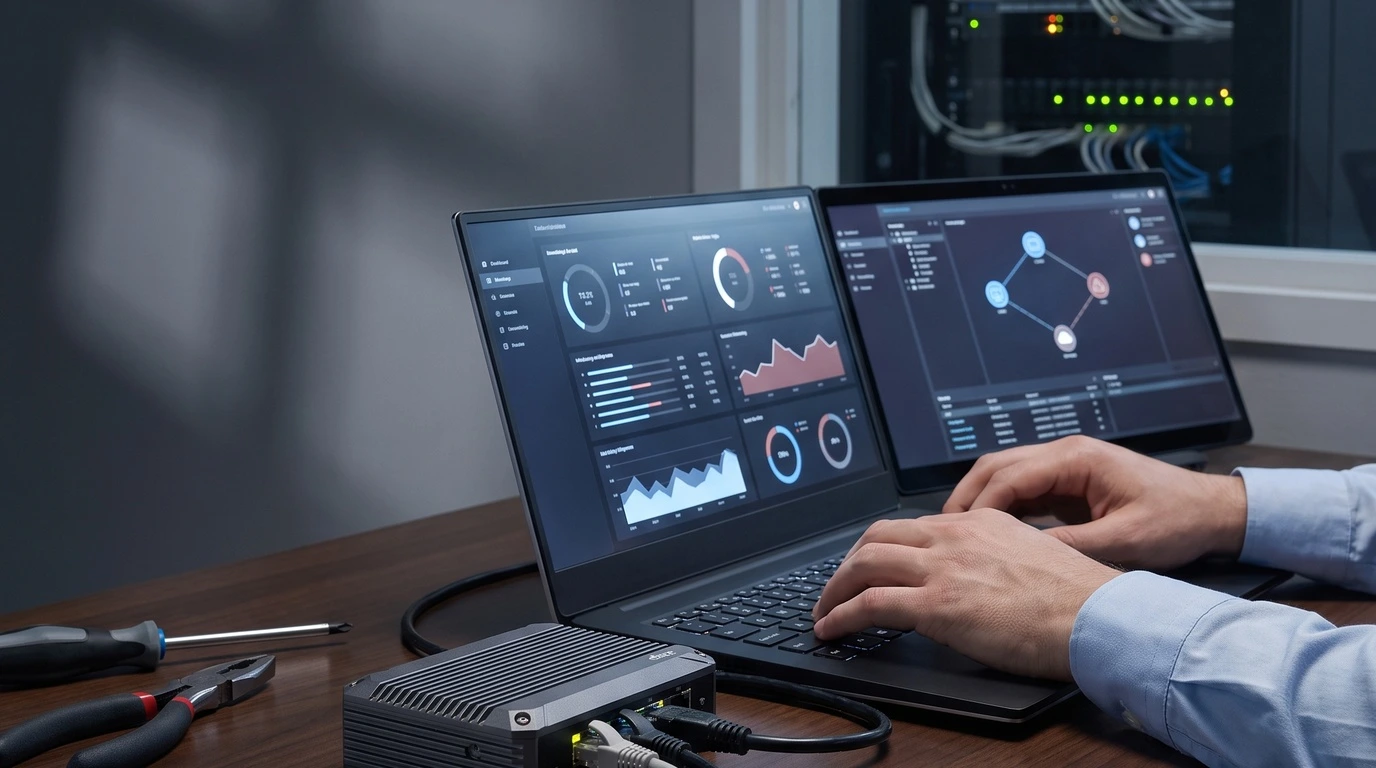
When deploying on-premise AI compute (such as AE-2000 edge vision hosts) and resident autonomous agents (AiA hosts) across factory floors, R&D labs, and branch offices, the network layer represents the most critical vulnerability: on one hand, developers running fragmented desktop proxy tools trigger commercial LLM platform risk bans due to fluctuating IPs and dirty exit nodes; on the other hand, remote engineers needing offsite access to local IPCs encounter zero static public IPs, while conventional router DMZ or port forwarding naively exposes automation networks to continuous brute-force ransomware attacks.
The validated industrial architecture is deploying the hardware-dedicated **ALNETS AiR AI Cloud Gateway Router** as the centralized network boundary: 1. **Cloud Outbound**: Centralizes upstream proxy routing directly at the gateway layer, supporting independent dedicated outbound proxy IPs per local client (up to 100 on AiR-100, up to 200 on AiR-200). Local workstations and scraping scripts require zero software clients, connecting transparently with clean, persistent exit fingerprints that eliminate platform risk bans; 2. **Cloud Inbound**: Establishes an encrypted reverse tunnel via a **single dedicated public VPS**, utilizing 50,000+ available mapped ports to expose designated on-premise services (AE-2000 inspection consoles, AiA agent endpoints) safely. Remote personnel connect securely via VPS IP and assigned ports without exposing physical edge machines directly to the public Internet; 3. **12W Fanless Industrial Casing**: Encased in an anodized aluminum die-cast heatbody operating silently at 0dB with dual Gigabit Ethernet ports (1 WAN + 1 LAN), delivering 24/7 continuous stability while confining proprietary corporate data strictly within the local LAN.
1. The Dual Inbound/Outbound Dilemma in Enterprise Edge AI
Deploying on-premise AI applications introduces network constraints fundamentally different from standard office connectivity. Teams face a simultaneous squeeze between outbound risk bans and dangerous inbound exposure:
- 1. Outbound Chaos: Fragmented personal proxies trigger platform account bans. During high-concurrency data harvesting (feeding local RAG vectors) or team collaboration with global AI APIs (OpenAI, Claude, GitHub Copilot), individual developers running diverse desktop VPN clients produce erratic IP jumping across data centers. AI platform fraud engines flag this anomalous hopping as coordinated credential sharing, instantly suspending enterprise developer accounts.
- 2. Inbound Deadlock: Absence of public IPs halts remote ops, while port forwarding invites internet-wide bot scans. Edge hosts reside behind carrier-grade NAT or multi-tier enterprise switches without routable public IPs. To achieve remote access, teams sometimes configure DMZ or port forwarding on primary firewalls. However, exposing ports like SSH(22), RDP(3389), or WebUI directly invites automated internet-wide scanner sweeps, subjecting internal IPCs and adjacent PLCs to relentless brute-force intrusions.
Consequently, edge AI networking requires purpose-built gateway hardware enforcing both centralized outbound proxy routing and tightly governed inbound reverse tunneling, rather than relying on brittle desktop software workarounds.
2. Cloud Outbound: Gateway-Level Proxy Routing & Isolated IP Allocation
The "Cloud Outbound" architecture of the ALNETS AiR gateway provides clean, persistent, and strictly isolated outbound egress routes for all local computing nodes:
- 1. Zero Client Software, True Plug & Play: Conventional setups require installing fragile proxy utilities on every workstation, which frequently conflict with local firewalls or break during OS updates. With AiR, all proxy protocols, cryptographic sessions, and policy routes are handled directly inside the gateway hardware. Local IPCs and laptops connect via Ethernet, accessing global AI APIs transparently with zero host software.
- 2. Independent Exit IP Binding & Multi-Task Segregation: AiR supports assigning distinct, dedicated outbound proxy IPs per local device or MAC address. For example, the AiR-100 assigns up to 100 isolated outbound IPs across local clients. During multi-pipeline web scraping, if one data collection process encounters rate limits on a target site, it remains completely segregated without impacting adjacent developer seats or core LLM pipelines.
- 3. Mitigating Platform Account Bans: Cross-border teams access global AI services through persistent, enterprise-vetted cloud egress nodes. Compared to shifting consumer VPN pools, dedicated clean IP routes present consistent, trusted digital fingerprints that preserve enterprise API credentials against fraud triggers.
3. Cloud Inbound: Secure Reverse Tunneling via a Single Fixed VPS
Rather than dangerously exposing on-premise hardware to the public Internet, AiR "Cloud Inbound" implements an enterprise-hardened **reverse proxy architecture anchored by a single dedicated public VPS**:
- 1. Outbound-Initiated Encrypted Persistent Tunnel: Operating deep behind multi-tier carrier NAT, the AiR gateway actively initiates an outbound encrypted tunnel connection to a dedicated enterprise VPS. Because the connection originates from the inside out, upstream firewalls and carrier routers permit the session naturally—requiring zero local public IPs and zero inbound firewall rule changes.
- 2. 50,000+ Granular Port Mappings: Over this encrypted backbone, AiR maps internal host service ports directly to the public VPS (in the format: VPS_IP + Mapped_Port). For instance, the WebUI(8080) of an on-site AE-2000 is mapped to VPS:38080, while the SSH(22) of an AiA host maps to VPS:32222. A single VPS provides over 50,000 assignable ports, accommodating hundreds of field devices effortlessly.
- 3. Zero Public Attack Surface for On-Site Hardware: Remote engineers access internal tools securely via the designated VPS IP and port. The actual physical hardware on the factory floor (AE-2000, AiA, PLCs) remains completely cloaked within the private LAN. Internet-wide vulnerability port scanners detect zero open listening ports at the physical site, rendering on-premise hardware entirely invisible.
4. Hardware Sizing & 3-Tier AI Infrastructure Synergy
Within the ALNETS on-site AI infrastructure matrix, hardware responsibilities are strictly demarcated: **AiR governs network boundaries and never executes agent workflows or on-premise model inference**. The three hardware tiers form a unified deployment topology:
| Hardware Model / Role | Core Specifications | Ecosystem Responsibility | Deployment Placement |
|---|---|---|---|
| **AiR Cloud Gateway Router** | Fanless anodized aluminum, 12W ultra-low power, Dual GbE (1 WAN + 1 LAN) | **Network Boundary Hub**: Manages Cloud Outbound proxy isolation and Cloud Inbound VPS reverse port mapping | Network rack, telecom closet, or main modem |
| **AiA Agent Host** | Dedicated low-power hardware, isolated physical sandbox, multi-LLM API hooks | **7x24H Resident Agent Engine**: Executes persistent workflow automation, freeing employee PCs | Office desk, server shelf, or workspace rack |
| **AE-2000 Edge Compute Host** | Industrial fanless die-cast (0dB), NVIDIA RTX 2000 Ada 16GB ECC, Dual GbE | **On-Premise Compute Engine**: Runs 100% offline private RAG, OCR, and vision inspection locally | Workshop cabinets, meeting rooms, or desks |
For product sizing, ALNETS provides tailored hardware tiers: • **AiR-100**: Standard tier supporting up to 100 concurrent devices and 100 isolated outbound proxy IPs, optimal for boutique engineering teams and single-site workshops; • **AiR-200**: High-density tier supporting up to 200 concurrent devices and 200 isolated outbound proxy IPs, engineered for high-throughput data collection clusters and multi-branch deployments.
5. Frequently Asked Questions (FAQ)
Q1: Why does AiR Cloud Inbound utilize a "Single Dedicated VPS Reverse Proxy" instead of dynamic public IPs at the site?
A1: The primary benefits are zero attack surface and physical cloaking. First, acquiring static public IPs from telecom carriers incurs recurring monthly surcharges, and many industrial parks cannot provision public IPs at all. Second, even with a public IP, configuring router port forwarding directly exposes local industrial computers to internet-wide bot scanners, suffering thousands of brute-force login attempts daily. Through AiR single-VPS reverse tunneling, physical on-site machines remain deep within the private LAN. Port scanners encounter only an enterprise-hardened cloud VPS, making local physical devices entirely invisible to hackers.
6. Why Client Workstations Require Zero Software for Cloud Outbound
Q2: Why do team members require zero local proxy clients on their computers to utilize AiR Cloud Outbound?
A2: Because AiR handles all proxy handshakes, policy routing, and traffic classification directly inside the gateway network stack. When local computers connect via Ethernet to the AiR LAN port (or downstream switch), the gateway transparently routes specified destination domains (*.openai.com, *.claude.ai, *.github.com) through the dedicated Cloud Outbound tunnel, while local web traffic flows directly over native ISP broadband. Workstation operating systems perceive only a clean standard LAN connection, completely free from software conflicts or unexpected agent crashes.
7. How the 3-Tier On-Site AI Infrastructure Operates in Synergy
Q3: When deploying AiA Agent Hosts, AE-2000 Compute Hosts, and AiR Gateways together, how is network synergy maintained?
A3: The three platforms operate in strict synergy: • **AiR (Network Boundary Hub)**: Acts as the dedicated physical gateway, providing Cloud Outbound proxy access for cloud LLM queries and Cloud Inbound reverse port mapping for remote ops, serving as the physical security firewall; • **AiA (7x24H Resident Agent Engine)**: Connected directly to the AiR LAN, running autonomous corporate workflow agents continuously, querying external services through AiR Cloud Outbound without requiring employee PC uptime; • **AE-2000 (On-Premises Compute & RAG Foundation)**: Hosted on the same LAN, leveraging dedicated RTX 2000 Ada GPU hardware to execute private RAG document indexing and offline inference, ensuring sensitive contracts never leave the premises. Each tier excels at its specific domain, delivering complete data sovereignty alongside effortless global AI connectivity.
ARCHITECTURE & HARDWARE SYNERGY
Recommended Products & Bundles
Hardware appliances, gateways, and collaborative suites referenced in this guide:
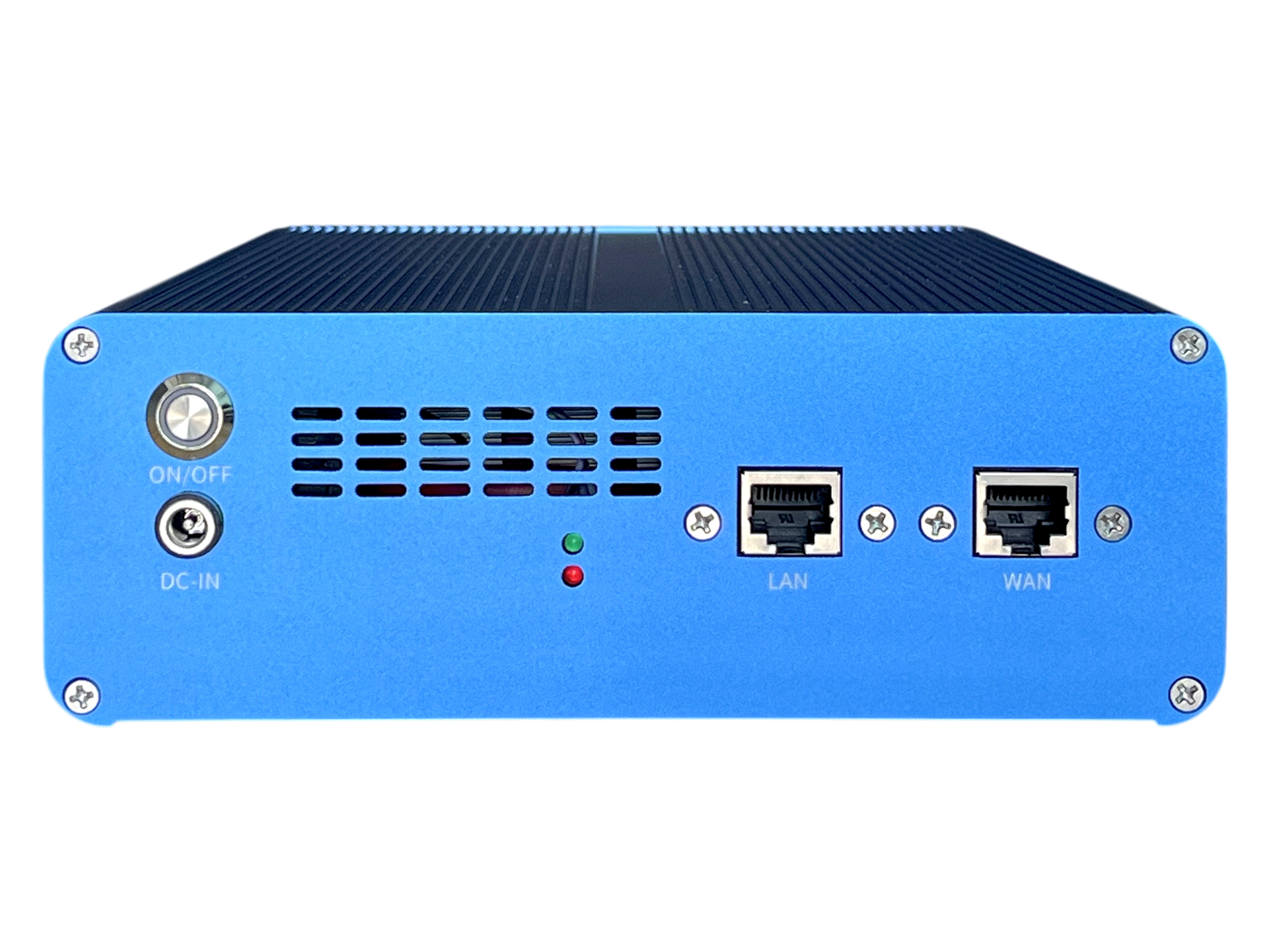
AiR AI Cloud Gateway Router
Secure encrypted tunneling, multi-wan routing and remote access gateway for on-site AI deployments.
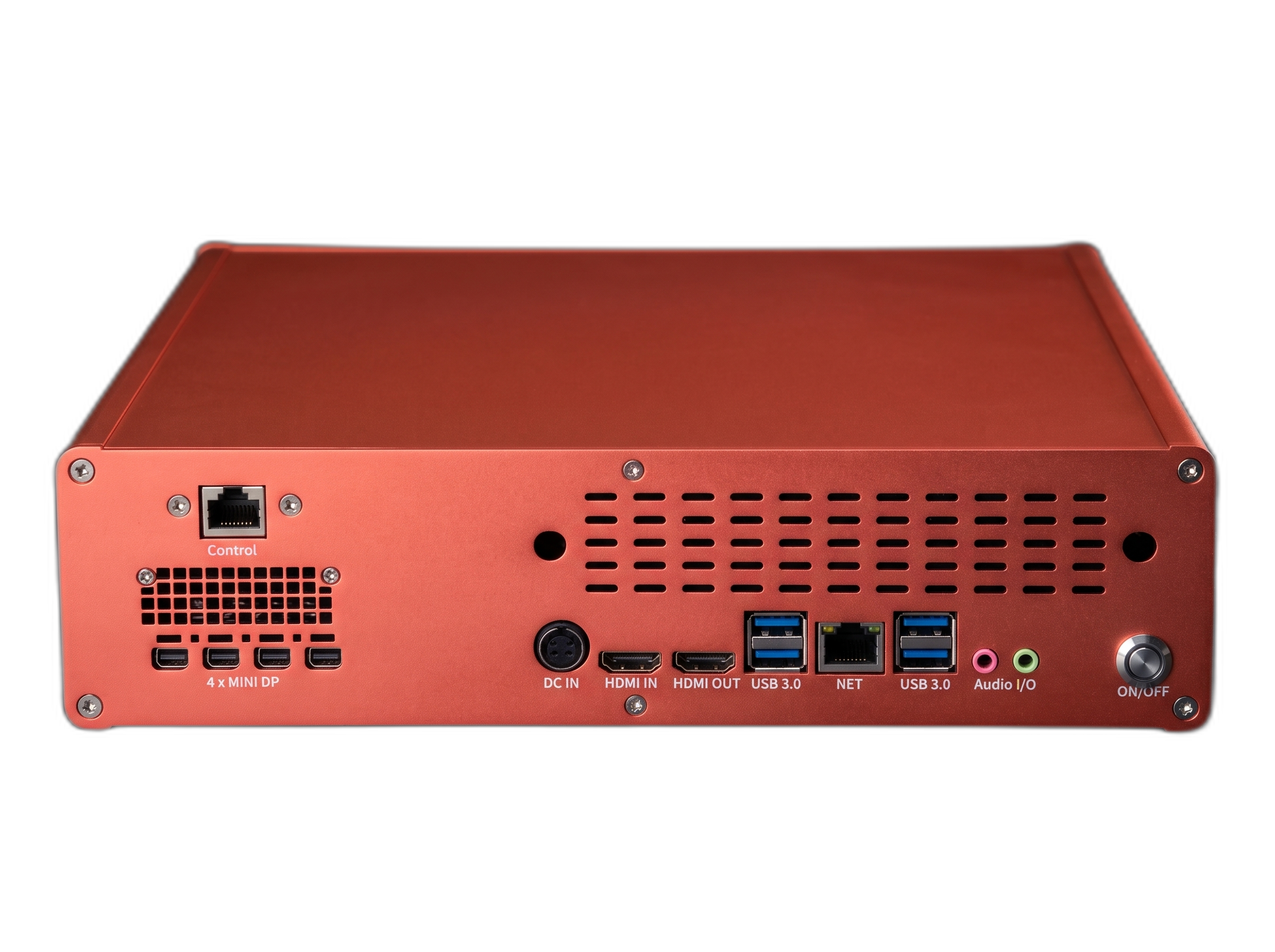
AE-2000 Industrial Edge AI Computer
Local AI compute for industrial and commercial sites, with two system configurations. Both use an NVIDIA RTX 2000 Ada GPU with 16GB GDDR6 ECC memory.
AiR Cloud Gateway Router Details
Integrated hardware topology, security boundary, and turnkey suite
Agent Workspace & Edge Synergy Solution
Integrated hardware topology, security boundary, and turnkey suite
7×24 Dedicated Autonomous Agent Workspace
Deploy dedicated AiA agent hosts, AiR secure network egress, API Gateway per-employee model governance, and AE-2000 private knowledge retrieval—organizing role-specific models, docs, and continuous workspaces with full bespoke customization support.
Enterprise Private Knowledge Base & Q&A Hub
Organize scattered manuals, installation guides, troubleshooting trees, and internal SOPs into an authoritative, private knowledge retrieval engine with complete confidentiality.