
ALNETS · Technical articles
High-Density Wireless Device Matrices: BPR-W Rack RF Tuning and Internal Port Forwarding Control
A field engineering guide to deploying dense mobile device matrices with BPR-W routers: RF channel planning, power attenuation to prevent cross-talk, and internal port forwarding for LAN-only control without consuming external proxy bandwidth.
Quick Takeaways (TL;DR)
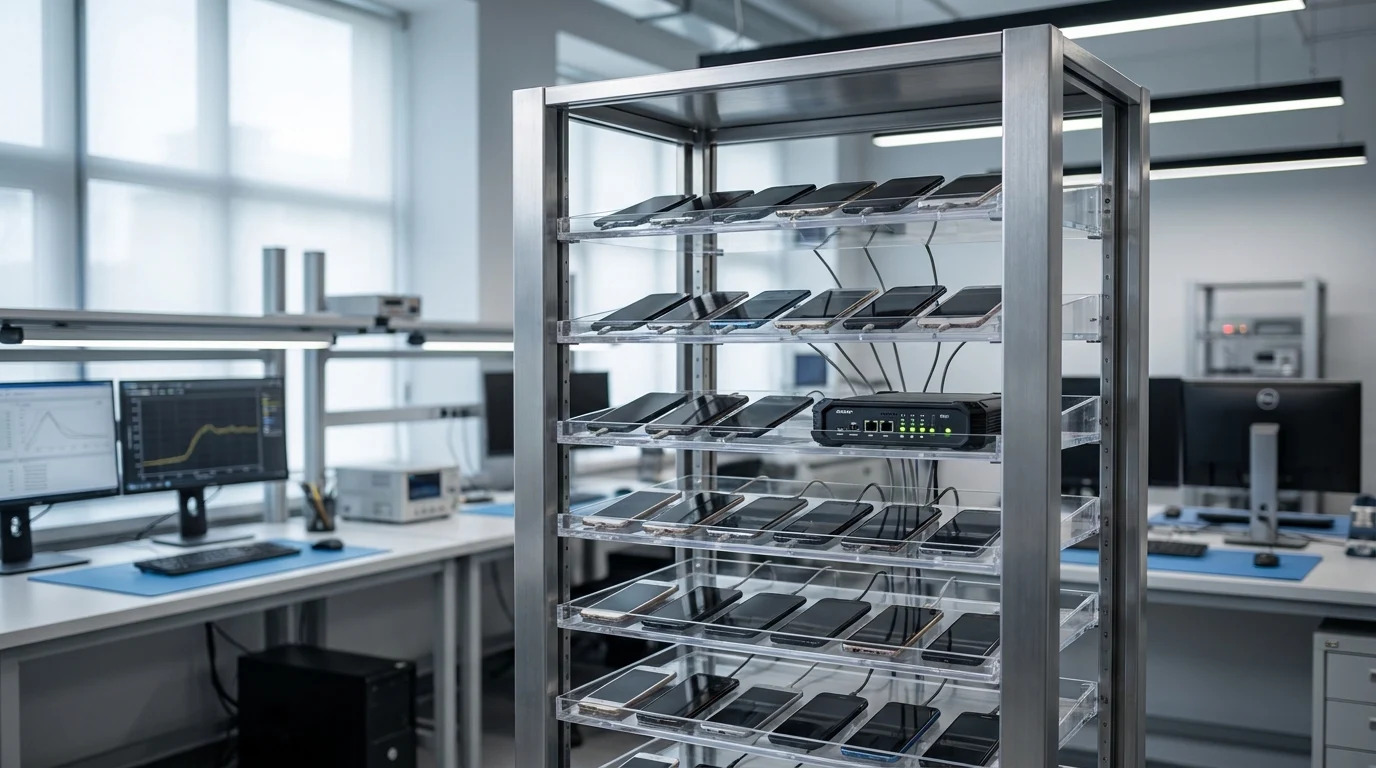
High-density device setups (50 to 200 operational phones, mini PCs, or matrix workstations) suffer from two chronic bottlenecks: wireless co-channel interference that triggers high packet loss, and control traffic inadvertently burning expensive proxy bandwidth. By leveraging BPR-W channel segregation (allocating clean 5GHz non-overlapping channels with power attenuation) paired with internal port forwarding (RDP 3389 / SSH / ADB 5555), management machines communicate with phones via wire-speed L2 switching. This achieves rock-solid multi-store isolation while keeping screen mirroring strictly on LAN with zero external proxy cost.
High-Density Rack RF Congestion & Channel Planning
When multiple wireless access points and dozens of handsets are packed into standard server racks, default auto-settings create severe RF degradation. BPR-W recommended engineering rules:
- Decommission 2.4GHz, Standardize on 5GHz: The 2.4GHz band only offers 3 non-overlapping channels (1, 6, 11), saturating immediately in dense racks. Disable 2.4GHz in BPR-W settings and deploy clean 5GHz channels.
- Staggered 5GHz Channel Mapping: Manually pin adjacent BPR-W units to distinct non-overlapping channels (e.g., Unit A on Ch 36, Unit B on Ch 44, Unit C on Ch 149, Unit D on Ch 157). Never use auto-hunting.
- Tx Power Attenuation: Phones sit within 1.5 meters of router antennas. Lower BPR-W transmit power to Low/Medium (14-17 dBm). This delivers 100% signal strength while preventing RF spillover into adjacent racks.
LAN-Only Control Architecture via Internal Port Forwarding (Zero Proxy Overhead)
Many matrix operators inadvertently route heavy desktop screen streams (RDP, Scrcpy, Total Control) through outbound proxy links, wasting expensive gigabit data bundles and introducing high latency. BPR-W solves this with precise split-horizon routing:
| Traffic Stream | Carrying Path | Bandwidth & Cost Impact |
|---|---|---|
| Outbound Business (Web, API, Video Upload) | Encrypted outbound through assigned CloudLink / dedicated proxy | Dedicated public proxy IP, strict anti-association, normal business bandwidth quota |
| Internal Control (RDP, ADB 5555, Screen Cast) | Terminated within BPR-W local Gigabit switch fabric | Pure LAN L2 forwarding: 0 latency, 0 packet loss, zero proxy bandwidth burned! |
Standardized Rack Cabling and Deployment Steps
- Step 1: Rack Spatial Layout. Place BPR-W routers on ventilated trays separate from endpoints. Orient antennas at 45-degree staggered angles, away from structural steel pillars.
- Step 2: Dual Gigabit Uplink. Wire the BPR-W WAN port directly to core switches via Cat6 cables to ensure lossless upstream headroom.
- Step 3: Batch Subnet Generation & CloudLink Binding. Provision subnets via CSV batch import in BPR-W console, mapping designated VPS exits to unique SSIDs.
- Step 4: Control Port Mapping & Telemetry Verification. Assign static LAN IPs to endpoints, verify zero-proxy traffic on RDP/ADB pipelines, and run Kill-Switch tests.
Frequently Asked Questions (FAQ)
Practical engineering questions on high-density matrix setups:
- Q: For racks holding 100+ handsets, what is the optimal network topology? A: Deploy two BPR-W60 units in parallel. Each BPR-W60 supports 50-60 devices on separated 5GHz non-overlapping channel blocks (e.g., Unit 1 on 36/40, Unit 2 on 149/153). This maximizes throughput while providing modular hardware redundancy.
- Q: Does heavy screen casting saturate outbound business bandwidth? A: No. BPR-W integrates dual Gigabit interfaces with dedicated wire-speed hardware switching. Internal LAN packet forwarding is handled natively by the switch fabric without loading WAN queues, ensuring low-latency control and smooth video uploads simultaneously.
ARCHITECTURE & HARDWARE SYNERGY
Recommended Products & Bundles
Hardware appliances, gateways, and collaborative suites referenced in this guide:
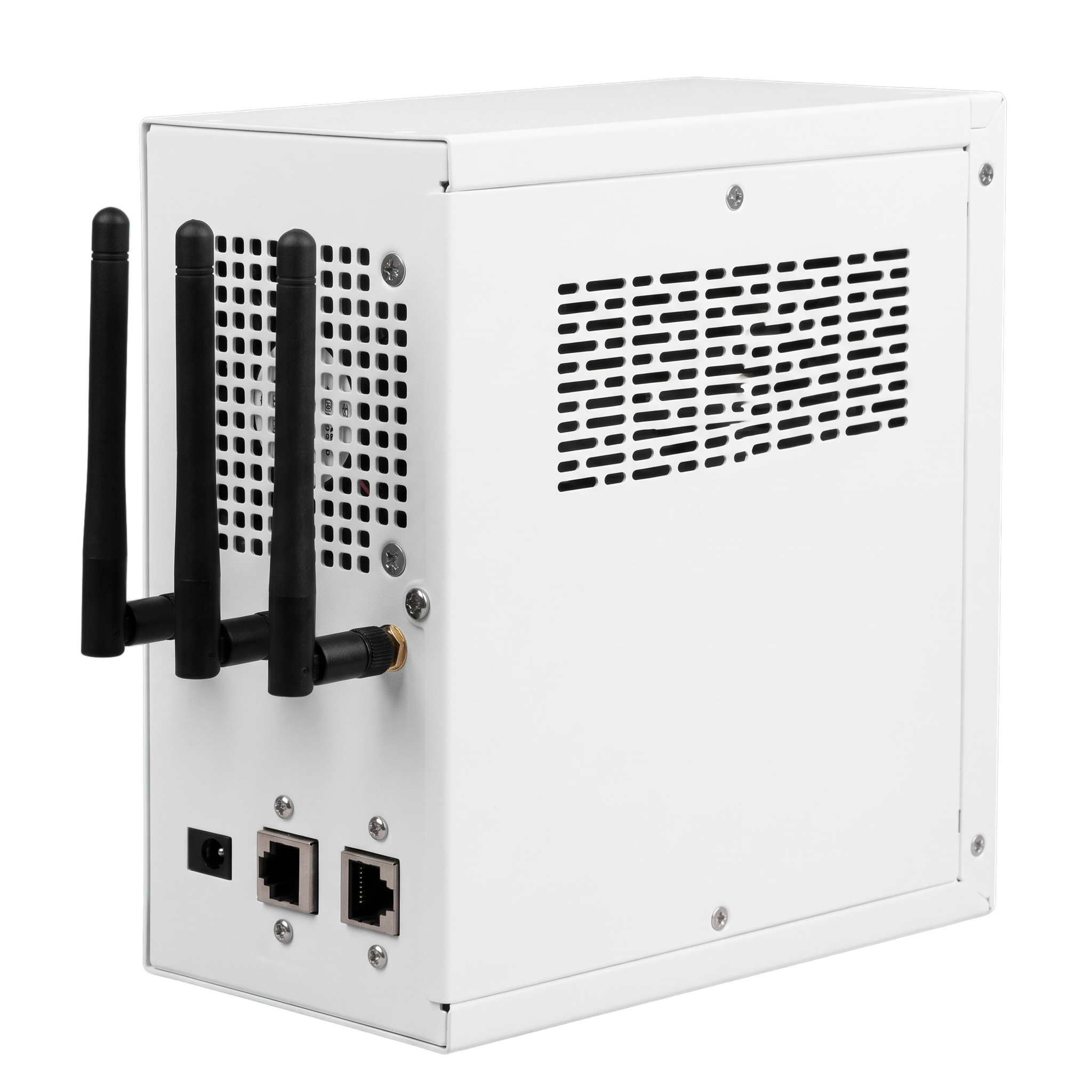
BPR-W Wireless Proxy Router
Build up to 60 independent isolated sub-routers with hardware-level Kill-Switch leak protection.
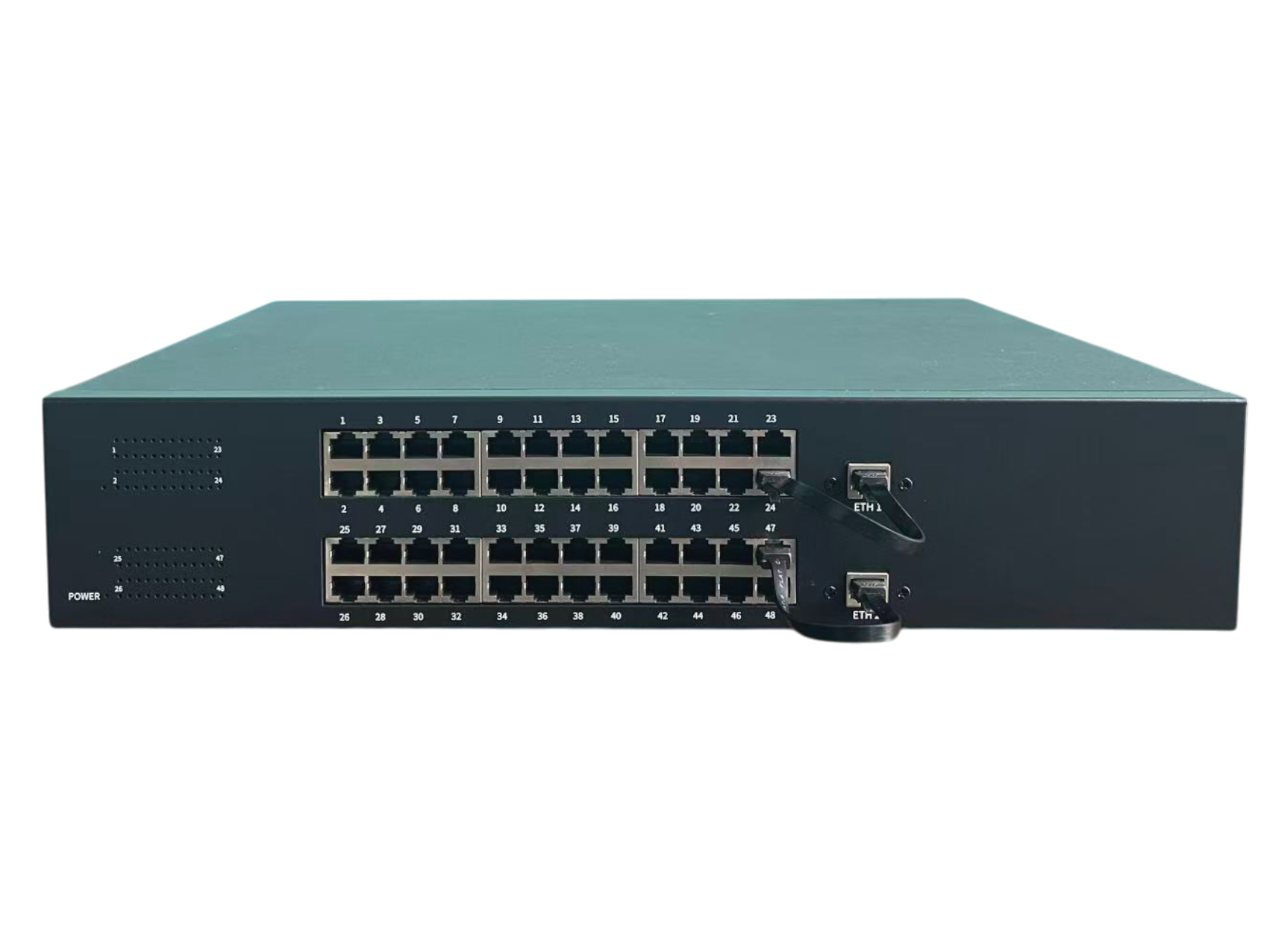
MLR Series Multi-LAN Proxy Router
One LAN port, one isolated subnet. Consolidates 22 or 44 isolated physical subnets in a single 19" rack chassis.
BPR-W Wireless Batch Proxy Router
Integrated hardware topology, security boundary, and turnkey suite
Cross-Border AI Agent Matrix Bundle
Integrated hardware topology, security boundary, and turnkey suite