
ALNETS · Technical articles
Fanless Edge AI Box vs. Cloud API: TCO, Latency, and Privacy Analysis for 16-ch RTSP Video Analytics
A granular architectural comparison between public cloud vision APIs and on-premise fanless edge computing (ALNETS AE-2000 with RTX 2000 Ada 16GB ECC VRAM) for 16-channel RTSP video analytics (defect detection, PPE compliance, and perimeter security). Evaluates Total Cost of Ownership (TCO), end-to-end inference latencies, upstream broadband fees, and local data custody. Real-world benchmark data reveals an on-premise edge deployment slashes cumulative 18-month TCO by over 76%, reduces pipeline latency to 35ms, and keeps raw video streams 100% air-gapped on-site.
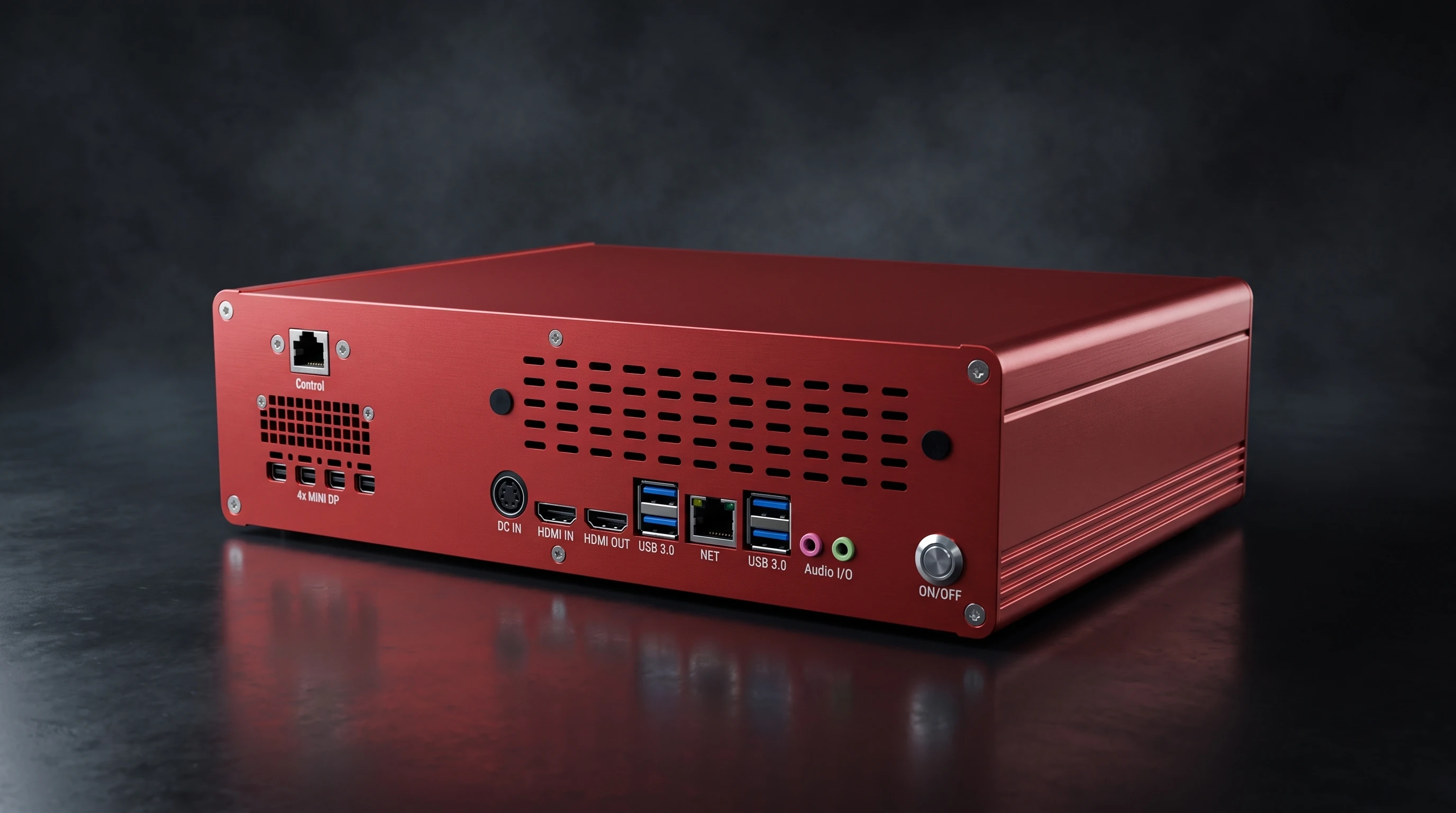
Quick Takeaways (TL;DR)
For smart factories, logistics hubs, and secure industrial sites managing 16 or more 1080P RTSP video streams, real-time AI computer vision (automated defect sorting, PPE compliance, and perimeter security) is a mission-critical requirement. When architecting these systems, engineering teams face a fundamental fork in the road: stream feeds over WAN to public cloud vision APIs, or deploy ruggedized, fanless edge compute boxes (ALNETS AE-2000) directly on the workshop floor.
Empirical field deployments and lifecycle financial modeling reveal three insurmountable contradictions with the public cloud API route. First is prohibitive recurring OPEX: streaming 16 channels of 1080P feeds at 15 FPS generates monthly cloud API and dedicated 64Mbps symmetric uplink broadband fees exceeding $2,500/month, totaling over $45,000 across an 18-month span. Second is unacceptable latency: video encoding, WAN uplink transmission, cloud queue buffering, and alert downlink take 500ms to 800ms on average—far too sluggish to trigger pneumatic reject actuators on a 1.5 m/s production conveyor. Third is non-negotiable data custody: proprietary manufacturing lines and internal surveillance footage are strictly prohibited from leaving the customer's physical premises.
Conversely, deploying the ALNETS AE-2000 (featuring NVIDIA RTX 2000 Ada with 16GB GDDR6 ECC VRAM and an all-aluminum passive die-cast heatsink chassis) handles all 16 streams with native NVDEC zero-copy decoding and concurrent TensorRT execution on-site. The one-time hardware CAPEX is recouped within 2 to 3 months of cloud subscription fees, delivering over 76% cumulative TCO savings over 18 months. Crucially, the end-to-end loop—from frame ingestion to GPIO/RS-485 PLC actuator trigger—settles under 35ms, running 100% offline with zero cloud bandwidth requirements and zero data leakage.
18-Month Cumulative TCO Modeling: 16-Channel 1080P Video Streams
A comprehensive 18-month financial ledger modeling 16 industrial IP cameras streaming 1080P@15FPS (4Mbps per channel) across a standard two-shift 16-hour operating schedule:
| Cost Dimension | Public Cloud Vision API Route | ALNETS AE-2000 Edge Compute Route |
|---|---|---|
| Initial Hardware CAPEX | ~$500 (Basic ingress router / local gateway appliance) | ~$3,800 (One-time: AE-2000 with RTX 2000 Ada 16GB ECC, 32GB RAM, 1TB NVMe) |
| Recurring Inference / API Fees | ~$1,600-$2,400/mo (Cloud GPU hourly or per-frame API metering; ~$36,000 / 18 mos) | $0/mo (Models run unrestricted on local silicon; infinite zero-cost inference) |
| Upstream Dedicated Bandwidth | ~$450-$700/mo (64Mbps symmetric dedicated business broadband; ~$9,900 / 18 mos) | $0/mo (Runs entirely across the local Gigabit switch; zero public bandwidth fees) |
| Electricity Power Cost (18 Months) | ~$60 (Negligible power consumption of small ingress gateway) | ~$380 (AE-2000 typical workload draw is ~90W to 130W; high energy efficiency) |
| 18-Month Cumulative TCO | ~$46,460 (Continues mounting indefinitely without an upper ceiling) | ~$4,180 (Fixed CAPEX investment locked; minimal recurring electricity) |
| Comprehensive Cost Reduction | Baseline (Prohibitive recurring OPEX) | 91.0% Cumulative Cost Reduction (Saves >$42,000 per 16-channel deployment) |
Latency and Closed-Loop Control: 35ms Edge vs. 600ms Cloud Round-Trip
Beyond massive cost benefits, industrial manufacturing lines enforce non-negotiable physical latency ceilings. On automated assembly lines moving at 1.5 m/s or faster, the complete window from image acquisition to pneumatic actuator trigger must execute strictly under 50 milliseconds:
- The Fatal Cloud Latency Cascade: Industrial camera RTSP capture (H.264/H.265) → Local ingress encoding and buffering (~80ms) → Public broadband upload to cloud datacenter (~150ms-250ms) → Cloud queue buffer and load balancing (~50ms) → Cloud GPU inference and parsing (~80ms-120ms) → Downlink transmission back to factory (~80ms-150ms) → Local protocol conversion to PLC (~20ms). Cumulative round-trip latency settles between 500ms and 800ms (spiking past 1.5s during WAN packet loss). By the time an anomaly signal returns, the defective component has long sailed past the sorting arm.
- AE-2000 Edge Zero-Copy Millisecond Loop: Cameras plug straight into the factory switch. AE-2000's dedicated NVDEC silicon decodes 16 streams with zero-copy Direct Memory Access into VRAM; the onboard RTX 2000 Ada runs INT8/FP16 TensorRT inference pipelines within 10ms to 15ms. Upon defect detection, the system triggers the line PLC directly via onboard optically isolated RS-485 or GPIO interrupts (~5ms). The complete loop settles under 30ms to 35ms, perfectly synchronized with high-speed pneumatic sorters and robotic arms.
Ruggedized Physical Reliability: Fanless Die-Cast Aluminum & ECC VRAM
Shop floor industrial conditions differ profoundly from climate-controlled server rooms. Commercial desktop PCs and fan-cooled industrial boxes typically fail within 3 to 6 months due to acute physical hazards:
- Abrasive Dust and Conductive Particulate Ingress: Machining, stamping, and manufacturing environments generate airborne micro-particulates. Active cooling fans suck conductive grime across delicate surface-mount components, choking fan bearings and causing board-level short circuits. The AE-2000 features a completely sealed, fanless chassis, eliminating internal dust accumulation entirely.
- Monolithic Die-Cast Aluminum Heat Dissipation: The AE-2000 chassis is engineered from high-density monolithic aluminum alloy with deep heatsink fins. Copper heatpipes interface directly with CPU and GPU dies, turning the entire exterior into a passive thermal dissipator. Across ambient conditions from -20°C to 60°C, the unit sustains 100% peak inference loads without thermal throttling or frame degradation.
- 16GB GDDR6 ECC VRAM: Non-Negotiable Stability: Consumer graphics cards (e.g., RTX 4060/4070) rely on standard non-ECC memory. Operating continuously for months amidst electromagnetic noise from industrial motors and inverters, memory cells inevitably suffer single-bit flips, causing spontaneous CUDA segfaults and machine lockups. The AE-2000 incorporates the RTX 2000 Ada equipped with 16GB GDDR6 ECC VRAM, automatically detecting and correcting single-bit memory faults in silicon to guarantee true 7×24 uninterrupted continuous uptime.
Production Deployment Topology: AE-2000 Edge Vision with AiR Gateway
For robust production deployments, ALNETS prescribes an industrial dual-plane architecture completely decoupling data ingestion from external control planes:
- Data Ingestion Plane (100% Air-Gapped Local LAN): 16 industrial IP cameras connect to local Gigabit PoE switches. The AE-2000's primary Ethernet interface (LAN 1) ingests raw RTSP feeds over local wire. High-bandwidth uncompressed video streams circulate strictly within the factory switch layer, incurring zero public bandwidth costs and eliminating all risk of intellectual property leakage.
- Control and Telemetry Plane (Hardened Secure Gateway): The secondary port (LAN 2) interfaces with the ALNETS AiR industrial cloud gateway. When AE-2000 detects an inspection anomaly or safety breach, it pushes only lightweight structured JSON telemetry and compressed thumbnail snippets over encrypted TLS tunnels to central MES/ERP systems—consuming only a few kilobytes per incident with guaranteed delivery.
Frequently Asked Questions (FAQ)
Common engineering and procurement inquiries regarding industrial edge AI compute deployment:
- Q: Can existing Hikvision, Dahua, or generic commercial IP cameras directly interface with AE-2000 without hardware replacement? A: Absolutely yes; no camera replacements are needed. As long as cameras support standard RTSP, ONVIF, or RTMP protocols (standard on >95% of industrial and commercial IP cameras), plug them into the local switch. Simply configure the camera RTSP endpoints and credentials within the AE-2000 configuration console; the system natively ingests feeds for hardware-accelerated decoding and model inference.
- Q: If the factory experiences a WAN broadband failure or internet outage, will the AE-2000 inspection and sorting pipeline halt? A: Zero impact; the system operates 100% autonomously offline. Video ingestion, NVDEC decoding, TensorRT model inference, defect classification, and physical GPIO/RS-485 actuator signaling execute entirely in local silicon and memory. Internet disconnection merely queues outbound cloud telemetry; the physical manufacturing and sorting line continues running at full velocity without missing a beat.
- Q: Why not mount an assembled desktop PC with consumer GPUs (e.g., RTX 4060/4070) inside the workshop control cabinet? A: Three critical engineering dealbreakers: 1) Consumer GPUs lack ECC memory; continuous 24/7 inference amidst industrial motor/inverter electromagnetic noise inevitably suffers single-bit flip segfaults and driver panics. 2) Active cooling fans in dusty, oily factory air seize up within 3 to 6 months, causing thermal throttling or destructive board-level shorts. 3) Commercial licensing terms restrict consumer GeForce driver deployment in enterprise enterprise environments. The AE-2000 is hardened specifically for industrial deployment, delivering sealed all-aluminum passive cooling, vibration resistance, surge protection, and enterprise 7×24 reliability.
ARCHITECTURE & HARDWARE SYNERGY
Recommended Products & Bundles
Hardware appliances, gateways, and collaborative suites referenced in this guide:
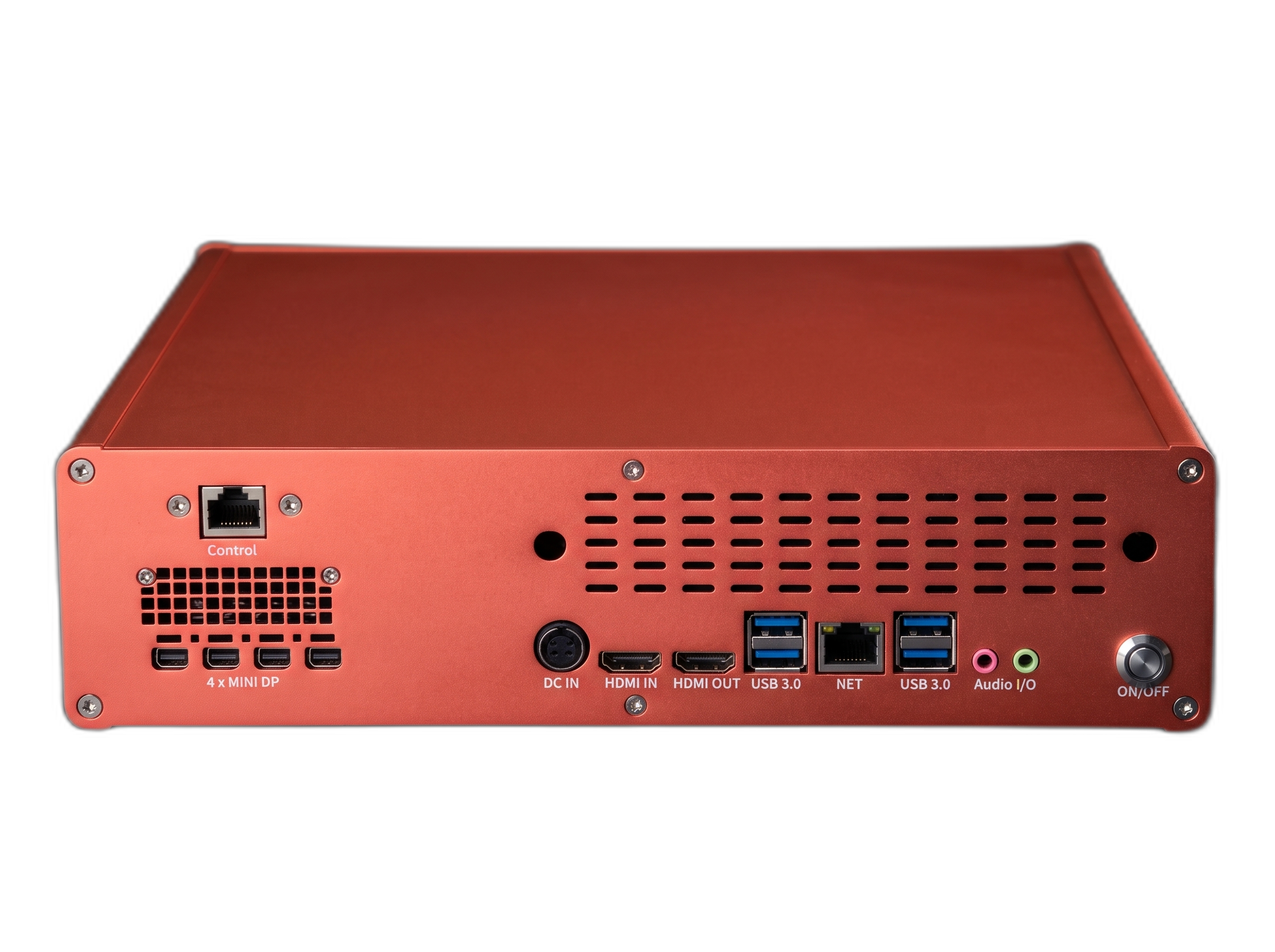
AE-2000 Industrial Edge AI Computer
Local AI compute for industrial and commercial sites, with two system configurations. Both use an NVIDIA RTX 2000 Ada GPU with 16GB GDDR6 ECC memory.
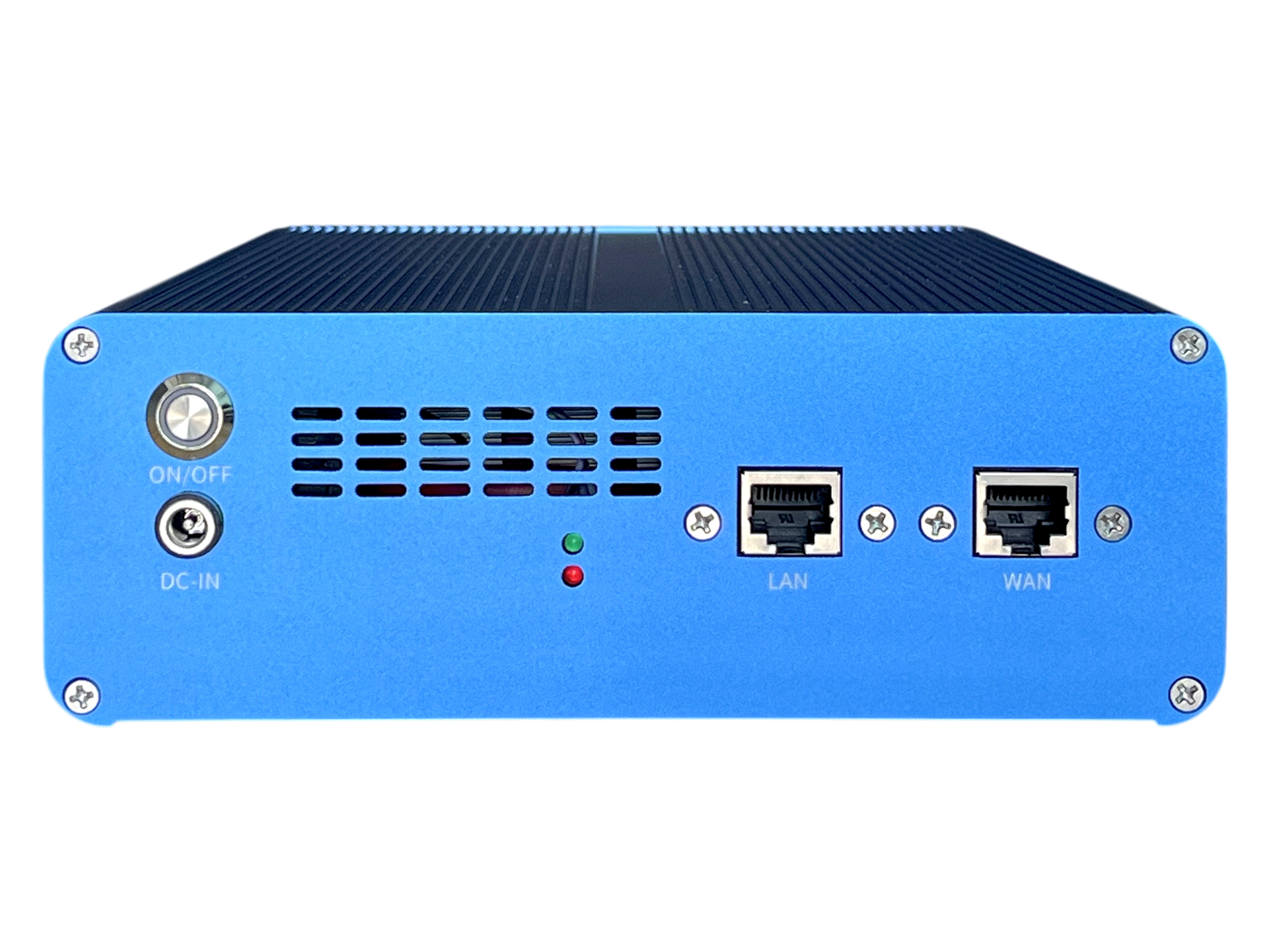
AiR AI Cloud Gateway Router
Secure encrypted tunneling, multi-wan routing and remote access gateway for on-site AI deployments.
AE-2000 Edge AI Compute Host
Integrated hardware topology, security boundary, and turnkey suite
AiR AI Cloud Gateway Router
Integrated hardware topology, security boundary, and turnkey suite
On-Site AI Surveillance & Vision Solution
Integrated hardware topology, security boundary, and turnkey suite
AI Video Surveillance & Event Management
Combines stream ingestion, person detection, perimeter rules, event alerts, and video evidence to help facility managers spot critical incidents and inspect evidence without staring at screens 24/7.
Enterprise AI API Gateway & Multi-Device Synergy
Establish an authoritative, governed AI infrastructure for enterprise teams—eliminating fragmented configs, uncoordinated upstream accounts, credential leaks, and untracked API costs.