
ALNETS · Technical articles
Enterprise AI API Gateway: Core Roles, Multi-Model Routing, Token Cost Ceilings, and Data Security Defense
A granular architectural analysis of enterprise challenges when scaling commercial LLMs: fragmented vendor accounts, runaway departmental token consumption, data leakage risks from unredacted prompts, single-point upstream outages, and lack of audit trails. Elaborates on the five core functions of an enterprise AI API gateway (unified multi-model routing, granular departmental rate limiting, physical credential isolation, HA failover, and compliance auditing). Provides engineering sizing criteria, network latency models, and best-practice deployment topologies with ALNETS hardware standards.
Quick Takeaways (TL;DR)
When enterprise AI adoption transitions from individual rogue accounts to mission-critical workflows across hundreds of employees, unmanaged API consumption inevitably triggers three IT crises: runaway token expenditures across unmonitored vendor accounts, catastrophic exfiltration of proprietary code and customer data, and sudden operational paralysis when single-source cloud APIs experience global outages.
An Enterprise AI API Gateway acts as the master dispatch valve and security firewall for enterprise AI infrastructure. Serving as the single intranet ingress for employee workstations, autonomous agents, and legacy business software, it dynamically routes to commercial cloud LLMs (OpenAI, Anthropic, DeepSeek, Qwen) and on-premise compute nodes. It executes unified auth routing, 4-tier token quota throttling, hardware-isolated credential storage, sub-second HA failovers, and compliance auditing. Enterprise benchmarks demonstrate that deploying a dedicated gateway prevents 92% of runaway loop expenses, slashes aggregate token costs by 35% to 50%, and guarantees absolute custody over corporate data assets.
1. Four Core Bottlenecks & Security Traps in Enterprise LLM Scaling
Without centralized gateway governance, departments typically create siloed developer accounts and bind corporate credit cards independently. As enterprise usage scales, this decentralized architecture triggers four crippling operational vulnerabilities:
- 1. Scattered API Keys & Offboarding Leaks: Project groups embed master API keys in plaintext client apps and local configs. Departing employees or compromised git repositories frequently expose active keys, allowing third parties to drain corporate credit lines.
- 2. Token Billing Black Holes & Runaway Loop Explosions: Unchecked automated scripts, scraping workflows, or experimental autonomous agents can enter recursive loops overnight, burning thousands of dollars before sunrise. Absent granular daily ceilings, finance teams face unbudgeted surprises.
- 3. Data Exfiltration & Compliance Blind Spots: Employees regularly paste customer phone numbers, proprietary financials, and unreleased source code directly into prompts. Routing unredacted enterprise payloads to third-party public clouds directly violates enterprise compliance mandates.
- 4. Upstream Vendor Single Point of Failure (SPOF): Commercial APIs frequently throw HTTP 503 service overloads, 429 rate limit errors, or regional network blips. Hardcoded client connections instantly paralyze production when a primary provider suffers downtime.
2. Five Architectural Pillars of an Enterprise AI API Gateway
An Enterprise AI API Gateway is far more than a basic HTTP reverse proxy; it is a specialized industrial network controller combining intelligent model routing, financial metering, and security access isolation:
- 1. Unified Multi-Model Aggregation & Adaptive Routing: Exposes standard OpenAI-compatible API schemas to internal apps while pooling diverse cloud and on-premise models under the hood. Automatically routes simple text tasks to cost-effective models while reserving flagship models for complex reasoning.
- 2. 4-Tier Token Quota Faucets & Hard-Limit Throttling: Enforces rigid hierarchical quotas (Enterprise -> Division -> Project -> Individual User). Caps developers at specific daily token thresholds; requests exceeding thresholds are automatically blocked or gracefully downgraded to free local models.
- 3. Hardware Credential Isolation & Key Pool Rotation: All actual upstream vendor API keys are encrypted inside the gateway appliance. Client endpoints only access temporary, scoped intranet virtual tokens, shielding production secrets from rogue inspection.
- 4. Sub-Second HA Failover & Resilience Circuit Breakers: Active health probes detect upstream timeouts, 429 concurrency throttles, or 5xx server faults, transparently retrying and rerouting requests to standby providers within 15 milliseconds.
- 5. Line-Rate Data Redaction & Immutable Audit Trails: Before packets traverse outward across the WAN, local regex and semantic engines sanitize PII, account numbers, and classified internal code strings. Cryptographic logs record user identity, department, and token counts for automated compliance reporting.
3. Sizing & Selection: Open-Source Proxy vs. Dedicated Gateway vs. Cloud Aggregator
Engineering teams evaluate three primary paths when adopting API gateways. The following matrix contrasts their structural strengths and trade-offs:
| Evaluation Dimension | Self-Hosted Open Source (LiteLLM/OneAPI) | Dedicated Enterprise Gateway (ALNETS Standard) | Third-Party Cloud API Aggregators |
|---|---|---|---|
| Deployment & Ingress | Self-hosted on generic VMs or dev PCs | On-premise rackmount, 100% isolated intranet | Third-party public cloud infra |
| Latency Overhead | 10ms to 35ms (standard container networking) | < 2ms (Kernel line-rate bypass optimization) | 80ms to 250ms (cross-border cloud hops) |
| Secret Key Security | Plaintext DB or app memory exposure risks | Encrypted dedicated hardware secure vault | Entrusted to vendor cloud servers |
| Runaway Loop Kill-Switch | Software-only try-catch; fails under lockup | Hardware-level millisecond packet kill switch | None (relies on delayed webhook warnings) |
| Concurrent Connection Capacity | 500 - 2,000 conns; memory fragmentation prone | 10,000+ stable long-lived SSE connections | Capped by cloud subscription tier limits |
4. Deployment Topology & ALNETS Hardware Co-design
Within ALNETS unified architecture, the Enterprise AI API Gateway operates as the central coordination hub, orchestrating intranet employee workstations, local compute nodes, and outbound security gateways:
1. Intranet Client Layer: Employee PCs, dedicated AiA autonomous agent hosts, AE-2000 edge vision hosts, and internal ERP systems route all LLM requests strictly to the local gateway IP (e.g., 10.0.1.254:8000);
2. Gateway Coordination Layer: The ALNETS Enterprise AI API Gateway intercepts traffic, validates virtual tokens, debits departmental balances, and scrubs sensitive entities. Internal RAG queries route directly to on-premise compute nodes, while complex reasoning queries are signed with true API keys and routed to outbound uplinks;
3. Egress Isolation & Secure Uplink: Outbound calls pass through ALNETS AiR industrial cloud gateways / BPR-W isolated routing tunnels, connecting directly to authorized cloud model clusters. Responses stream back over pristine, isolated paths with complete accounting logs.
[Hardware Product Notice]: In alignment with our product roadmap, the dedicated standalone hardware edition of the ALNETS Enterprise AI API Gateway is currently under engineering preparation and will launch soon. Its core software routing algorithms, 4-tier token faucet throttling, and network isolation topologies are fully validated and operating within our active Agent Workspace solution deployments.
5. Frequently Asked Questions (FAQ)
Q1: Does routing through an on-premise AI API gateway introduce noticeable latency in LLM completions?
A1: Absolutely not. In standard Gigabit or 10GbE intranet environments, gateway header inspection, token deduction, and redaction add less than 2 milliseconds of latency. Compared to typical cloud LLM Time-to-First-Token (TTFT) of 400ms to 1500ms, gateway overhead is under 0.3%. Furthermore, with built-in semantic prompt caching, recurring team queries are served instantaneously from local RAM, measurably accelerating overall responsiveness.
Q2: When developers stream responses via Server-Sent Events (SSE), how does the gateway meter tokens accurately without breaking streaming?
A2: The gateway employs an atomic pre-authorization, zero-copy packet passthrough, and trailing chunk settlement protocol. It temporarily holds a small token deposit, streams text chunks at line-rate without buffering delays, and captures the final usage metadata chunk upon stream completion to reconcile exact balances. If a client terminates early, the gateway meters exact rendered tokens up to disconnect.
Q3: How does the gateway maintain uninterrupted service when upstream providers throw 429 rate limits or 503 outages?
A3: The gateway maintains an automated multi-provider fallback hierarchy. Administrators configure failover tiers (e.g., Primary: Claude 3.5 Sonnet -> Standby: DeepSeek-V3 / GPT-4o). When upstream health monitors detect rate limit rejections or gateway timeouts, requests are seamlessly transformed and re-dispatched to the standby tier within milliseconds.
ARCHITECTURE & HARDWARE SYNERGY
Recommended Products & Bundles
Hardware appliances, gateways, and collaborative suites referenced in this guide:
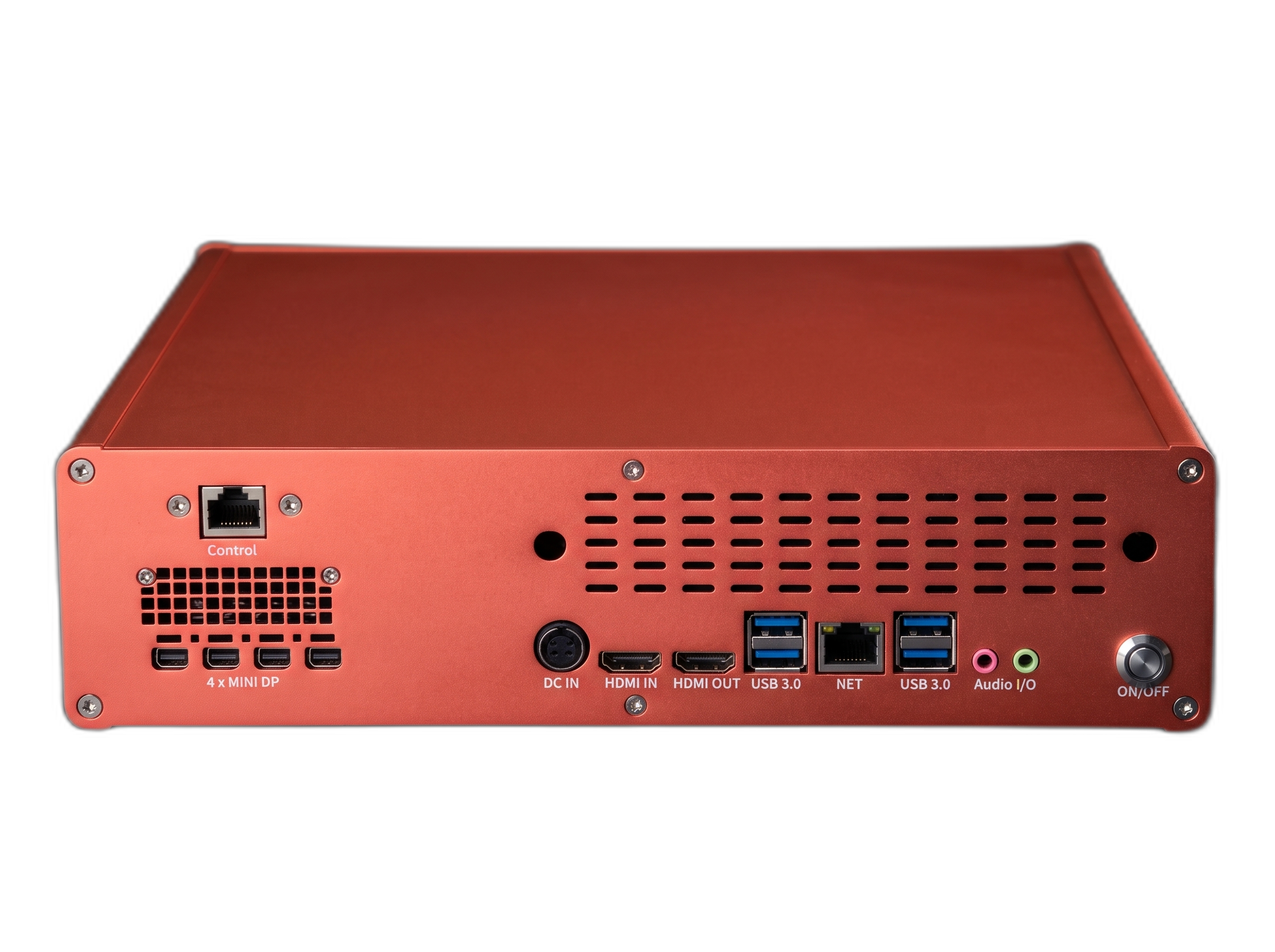
AE-2000 Industrial Edge AI Computer
Local AI compute for industrial and commercial sites, with two system configurations. Both use an NVIDIA RTX 2000 Ada GPU with 16GB GDDR6 ECC memory.
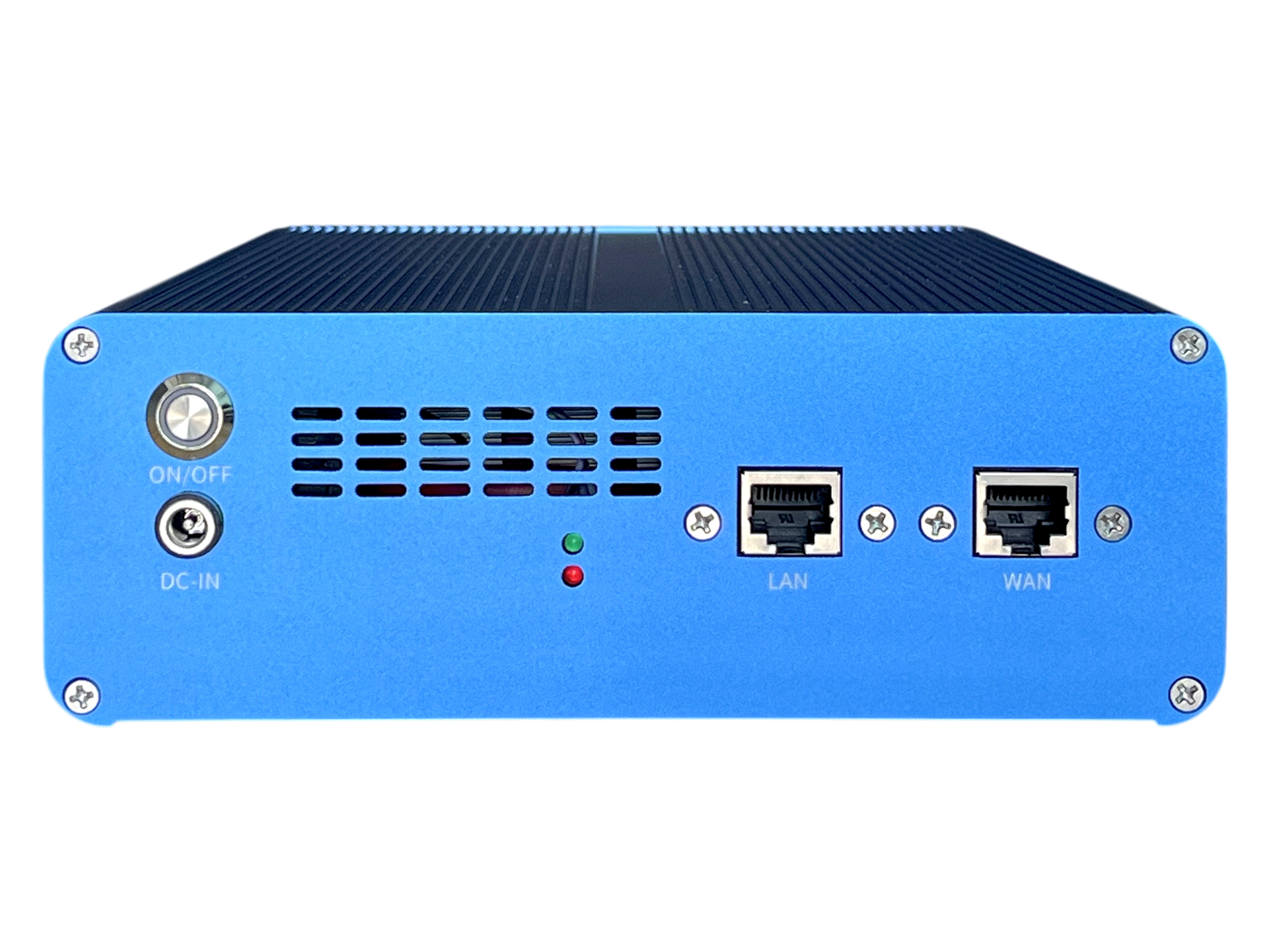
AiR AI Cloud Gateway Router
Secure encrypted tunneling, multi-wan routing and remote access gateway for on-site AI deployments.
Enterprise AI API Gateway Solution
Integrated hardware topology, security boundary, and turnkey suite
Higher Education AI Gateway Solution
Integrated hardware topology, security boundary, and turnkey suite
Agent Workspace Integrated Solution
Integrated hardware topology, security boundary, and turnkey suite
Enterprise AI API Gateway & Multi-Device Synergy
Establish an authoritative, governed AI infrastructure for enterprise teams—eliminating fragmented configs, uncoordinated upstream accounts, credential leaks, and untracked API costs.
Higher Ed & Research AI Gateway & Compute Governance
Establish an authoritative campus AI gateway hub for universities and research institutes. Unifies external cloud LLMs with on-premise private models (powered by AiW 6-GPU compute hosts and AiW-V workstations)—preventing curriculum and research data leakage while assigning tailored models across STEM, humanities, medicine, and arts for multidisciplinary AI diversity.
7×24 Dedicated Autonomous Agent Workspace
Deploy dedicated AiA agent hosts, AiR secure network egress, API Gateway per-employee model governance, and AE-2000 private knowledge retrieval—organizing role-specific models, docs, and continuous workspaces with full bespoke customization support.