
ALNETS · Deployment guides
Practical Guide: Ingesting RTSP Industrial Cameras to On-Premise Edge AI Compute Hosts Without Packet Loss
An engineering guide to retrofitting RTSP industrial cameras into on-premise edge AI systems, covering stream protocol tuning, hardware-accelerated zero-copy decoding, 16GB ECC VRAM stream capacity models, and fanless die-cast chassis deployment in harsh factory environments.
Quick Takeaways (TL;DR)
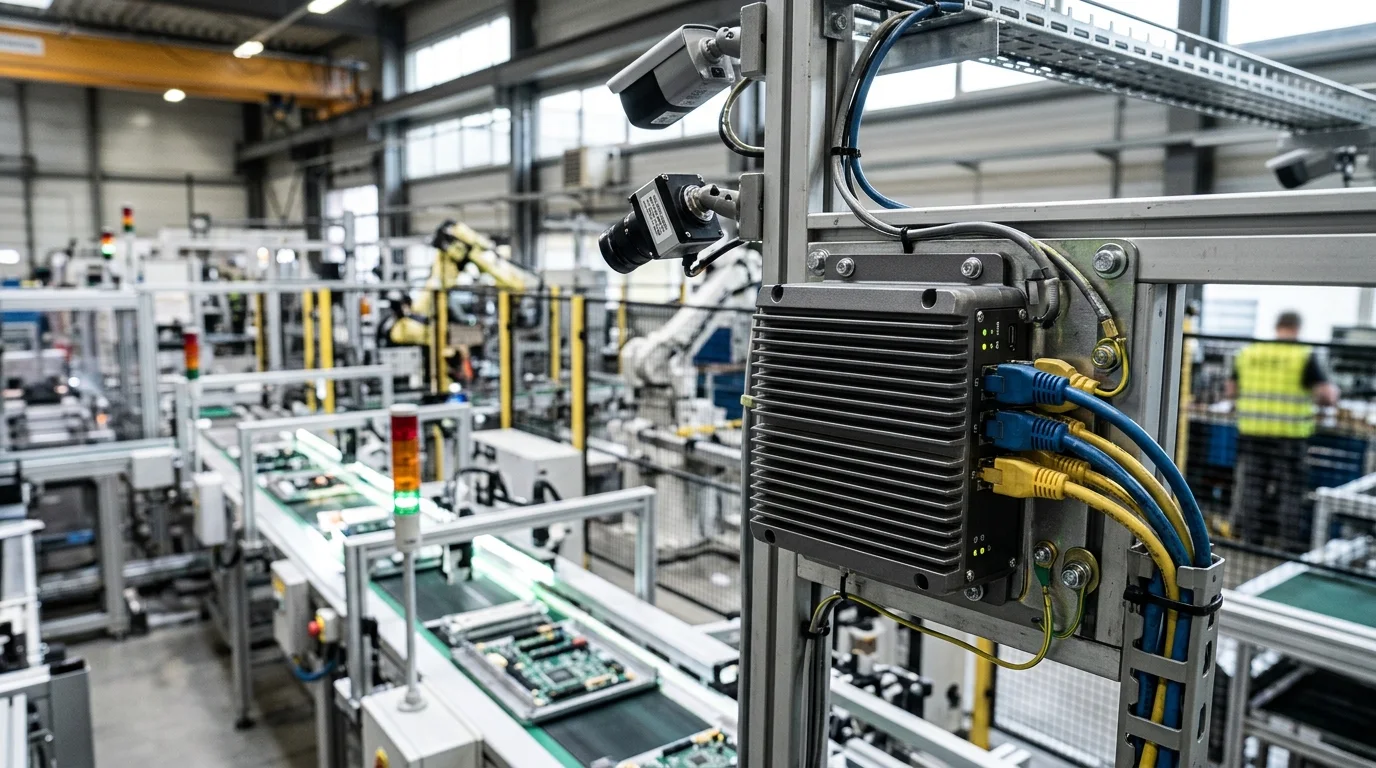
In manufacturing, logistics, and assembly inspection, cloud-bound video streaming suffers from three fatal bottlenecks: prohibitive outbound bandwidth expenses, unpredictable network latency, and strict industrial data sovereignty mandates forbidding video egress. The battle-tested architecture retrofits existing RTSP/ONVIF IP cameras into local edge AI compute hosts (such as AE-2000): enforcing RTSP over TCP prevents packet drops, while hardware-accelerated NVDEC zero-copy pipelines ingest video frames directly into GPU memory. A single 16GB GDDR6 ECC edge host sustains 8 to 16 concurrent 1080P/4K streams for defect detection with sub-35ms latency. Raw video stays 100% air-gapped on-premise, with only structured alert payloads routed out via secure gateway routers (AiR).
Three Core Roadblocks in Industrial Vision Retrofitting
Engineering teams retrofitting deep learning inspection models into operational plants face three structural hurdles:
- Legacy Retrofitting & Protocol Fragmentation: Plants already operate dozens of installed RTSP cameras across assembly points. Tearing them down for expensive specialized CoaXPress/GigE Vision sensors imposes prohibitive CAPEX. Ingesting standard RTSP/H.264/H.265 streams losslessly without rewiring is the primary requirement.
- Bandwidth Depletion & Cloud Latency Variance: A single 1080P 30fps stream consumes 4 to 8 Mbps; 16 concurrent streams generate ~100 Mbps continuous uplink. Streaming to public cloud GPUs incurs extreme bandwidth OPEX, while unpredictable WAN jitter ruins real-time pneumatic rejector timing.
- Data Sovereignty & Trade Secret Protection: Defect distributions, manufacturing yields, and workpiece geometry constitute core intellectual property. Industrial compliance strictly mandates that raw visual footage must never leave the physical factory perimeter.
Lossless RTSP Ingestion & CUDA Zero-Copy Pipeline
Traditional OpenCV software capture creates dropped frames, memory bloat, and creeping latency. A robust edge pipeline must be rebuilt across network and memory layers:
| Pipeline Stage | Traditional Bottleneck | Industrial Edge Best Practice (AE-2000) |
|---|---|---|
| Network Transport | Default UDP transport: Minor packet jitter causes visual tearing and corrupt macroblocks | Enforce RTSP over TCP (interleaved): Guaranteed packet ordering with ring buffers to prevent frame corruption |
| Video Decoding | CPU software decoding (FFmpeg/OpenCV): Multiple 1080P streams peg CPU at 100%, causing thermal throttling | Hardware NVDEC offload: Dedicated GPU silicon decodes H.264/H.265 independently, keeping CPU load below 5% |
| Memory Pipeline | Host memory bouncing: GPU decode -> copy to Host RAM -> copy back to VRAM, saturating PCIe bandwidth | CUDA Zero-Copy Surface: Decoded frames stay in VRAM as tensors, directly feeding YOLO/ResNet in < 35ms |
VRAM Capacity & Concurrent Stream Sizing Model (16GB ECC)
Engineering teams often struggle to determine required GPU memory. Below is the field-validated sizing model based on the NVIDIA RTX 2000 Ada (16GB GDDR6 ECC):
| Stream Format | Per-Stream VRAM (NVDEC+Buffer) | Model Weight & Batch VRAM | Recommended Concurrent Streams |
|---|---|---|---|
| 1080P @ 15fps (Process/Safety) | ~110 MB per stream | ~1.6 GB (Shared engine instance) | 16 to 24 streams concurrent |
| 1080P @ 30fps (High-Speed Sorting) | ~160 MB per stream | ~1.8 GB (Dynamic batch size 8) | 12 to 16 streams at line rate |
| 4K (2160P) @ 20fps (Micro Defect Inspection) | ~480 MB per stream | ~2.4 GB (Tiled slice inference) | 4 to 8 streams high-res |
Crucial engineering note: Factory environments require enterprise ECC (Error-Correcting Code) VRAM. Consumer GPUs (such as RTX 4060/4070) running continuous inference for months suffer from bit-flips caused by thermal fluctuations and electromagnetic noise, triggering spontaneous segfault crashes. The 16GB GDDR6 ECC VRAM on the AE-2000 corrects single-bit errors in hardware, ensuring uninterrupted 7×24 line stability.
Physical Reliability: Why Fanless Die-Cast Aluminum Matters
Factory floors differ vastly from climate-controlled server rooms. Commercial PCs and active-fan industrial boxes fail within 3 to 6 months due to clear physical vulnerabilities:
- Dust & Conductive Airborne Particles: Machining, textile, chemical, and PCB plants generate fine particulates. Active cooling fans suck abrasive dust onto circuit traces, destroying bearings and shorting boards.
- Ambient Heat & Oil Mist Deposition: Workshop ambient temperatures easily reach 40°C to 50°C in summer. Oil mist coats heatsink fins, choking airflow and forcing thermal throttling that slashes inference framerates.
- AE-2000 All-Aluminum Passive Die-Casting: Engineered with heavy-gauge finned aluminum alloy acting as a monolithic thermal chassis. The completely sealed, fanless design eliminates internal dust ingress and bearing wear, maintaining steady execution across -20°C to 60°C operating ranges.
ALNETS Field Vision Implementation Topology & Engineering Practices
For production rollouts, ALNETS recommends a dual-tier topology separating edge inference compute from network ingress/egress:
- Local Compute Tier (AE-2000): Dual GbE ports connect to the factory internal vision LAN. Port 1 pulls RTSP camera feeds for NVDEC ingestion and model execution; the onboard RS485/GPIO bus interfaces directly with line PLCs to trigger pneumatic rejection arms in milliseconds.
- Secure Gateway Tier (AiR): A fanless 12W AiR router serves as the sole boundary egress. It blocks external inbound probing while maintaining encrypted TLS reverse tunnels to push structured telemetry and alert JSONs to corporate headquarters.
- Air-Gapped Data Custody: High-bitrate video streams remain strictly confined within the local switch layer, completely eliminating public bandwidth fees and cloud compliance exposures.
Frequently Asked Questions (FAQ)
Common questions regarding industrial edge vision procurement and deployment:
- Q: Can existing Hikvision, Dahua, or generic IP cameras directly integrate with AE-2000? A: Yes, absolutely. As long as cameras support standard RTSP, ONVIF, or RTMP protocols (standard on >95% of industrial/commercial IP cameras), they plug into the local switch. AE-2000 ingests primary or secondary streams natively without replacing any camera hardware.
- Q: Does vision inspection continue if the factory WAN broadband is severed? A: Yes, 100%. Camera ingestion, NVDEC decoding, tensor inference, and PLC signaling operate entirely within local silicon. The system has zero dependency on cloud internet access; offline operation does not interrupt defect sorting.
- Q: Why not mount assembled consumer PCs with desktop GPUs (RTX 4060/4070) in factory cabinets? A: Three critical hazards: 1) Consumer GPUs lack ECC memory; continuous 24/7 inference inevitably suffers silent bit-flip crashes from thermal/RF noise. 2) Plastic shrouds and tiny fans seize within months in oily, dusty workshops. 3) Commercial licensing restricts consumer driver deployment in industrial workflows. AE-2000 is ruggedized specifically for unattended 7×24 operation.
ARCHITECTURE & HARDWARE SYNERGY
Recommended Products & Bundles
Hardware appliances, gateways, and collaborative suites referenced in this guide:
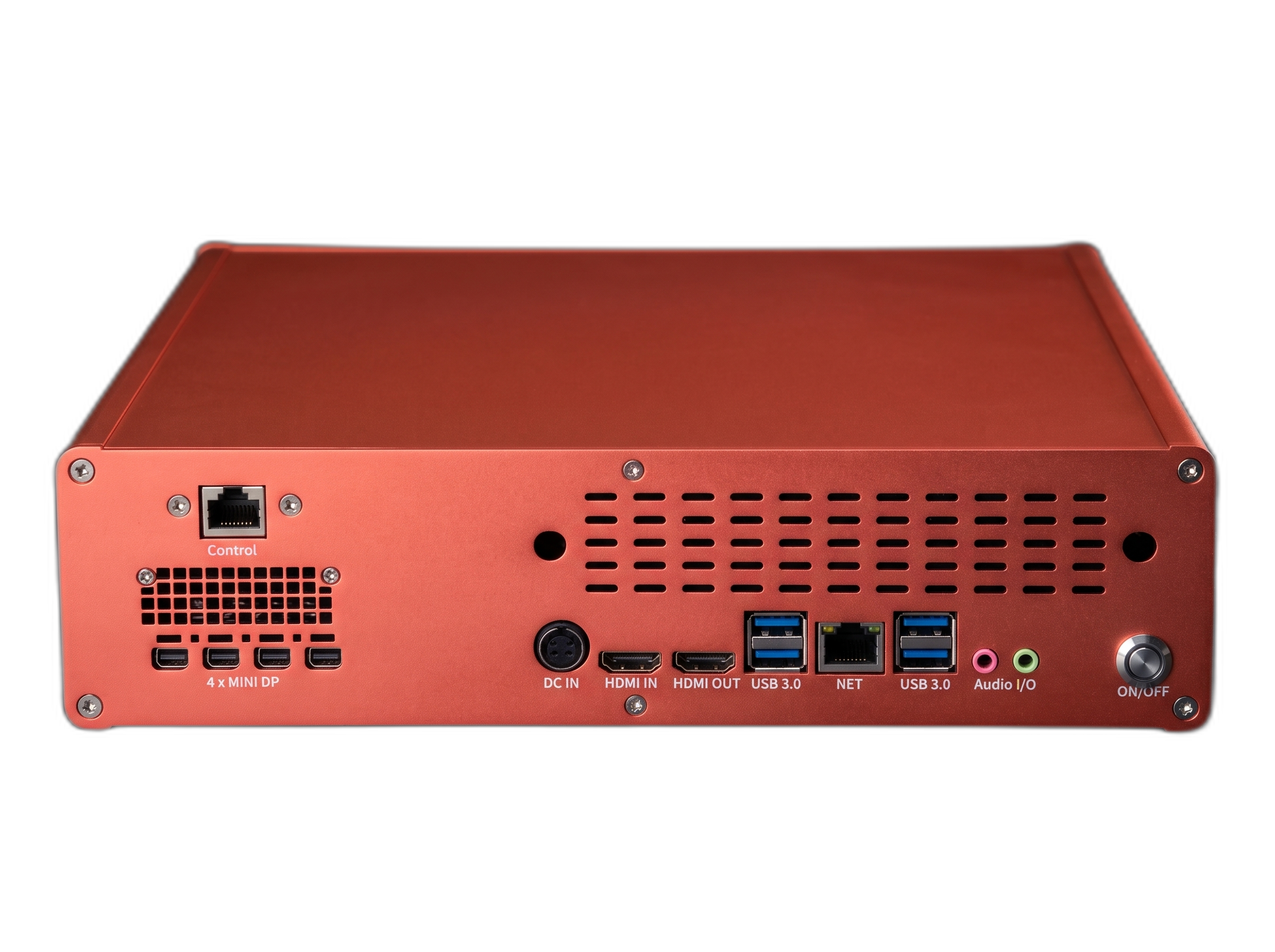
AE-2000 Industrial Edge AI Computer
Local AI compute for industrial and commercial sites, with two system configurations. Both use an NVIDIA RTX 2000 Ada GPU with 16GB GDDR6 ECC memory.
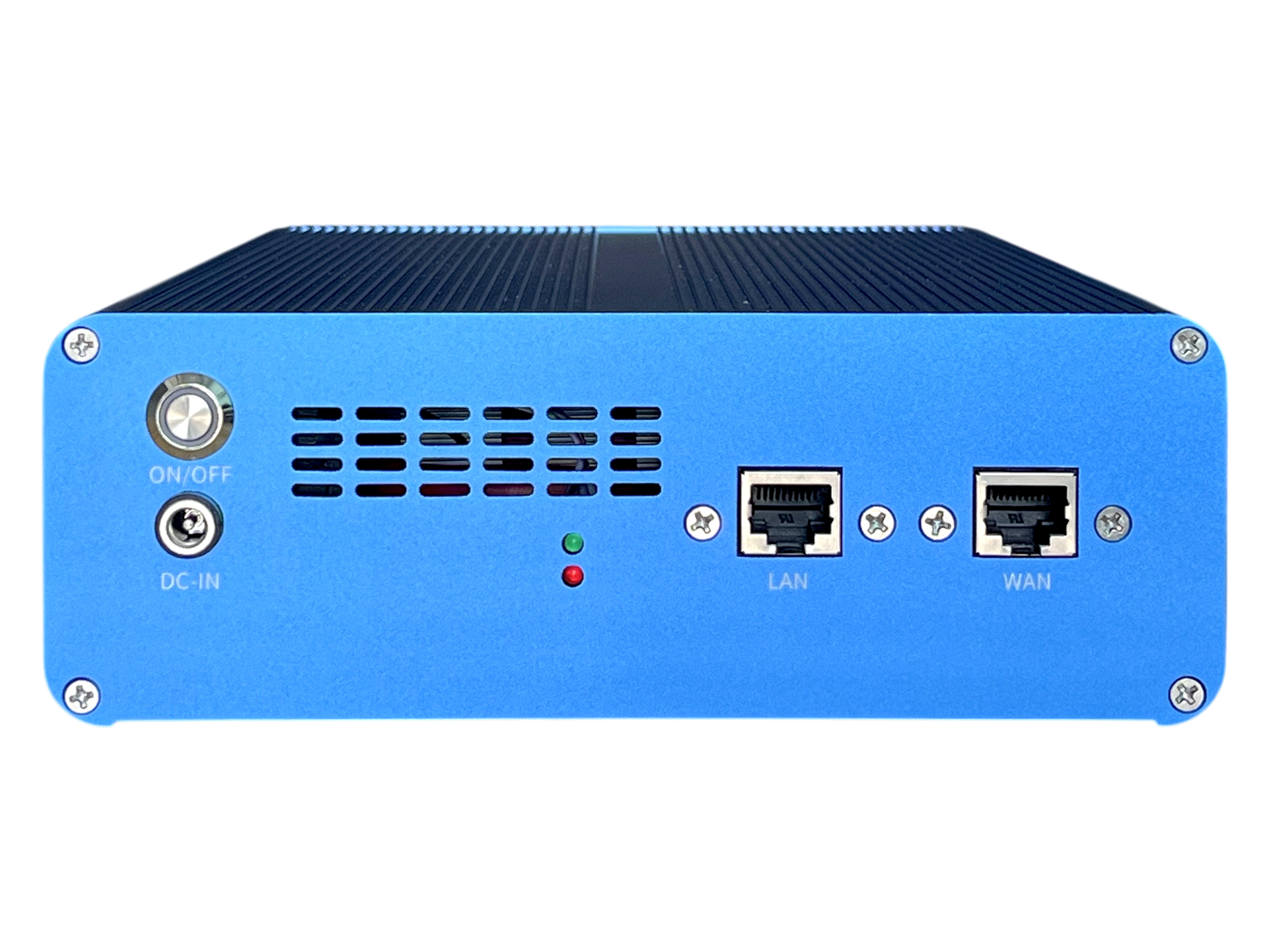
AiR AI Cloud Gateway Router
Secure encrypted tunneling, multi-wan routing and remote access gateway for on-site AI deployments.
AE-2000 Edge AI Compute Host
Integrated hardware topology, security boundary, and turnkey suite
AiR AI Cloud Gateway Router
Integrated hardware topology, security boundary, and turnkey suite
On-Site AI Surveillance & Vision Solution
Integrated hardware topology, security boundary, and turnkey suite
AI Video Surveillance & Event Management
Combines stream ingestion, person detection, perimeter rules, event alerts, and video evidence to help facility managers spot critical incidents and inspect evidence without staring at screens 24/7.